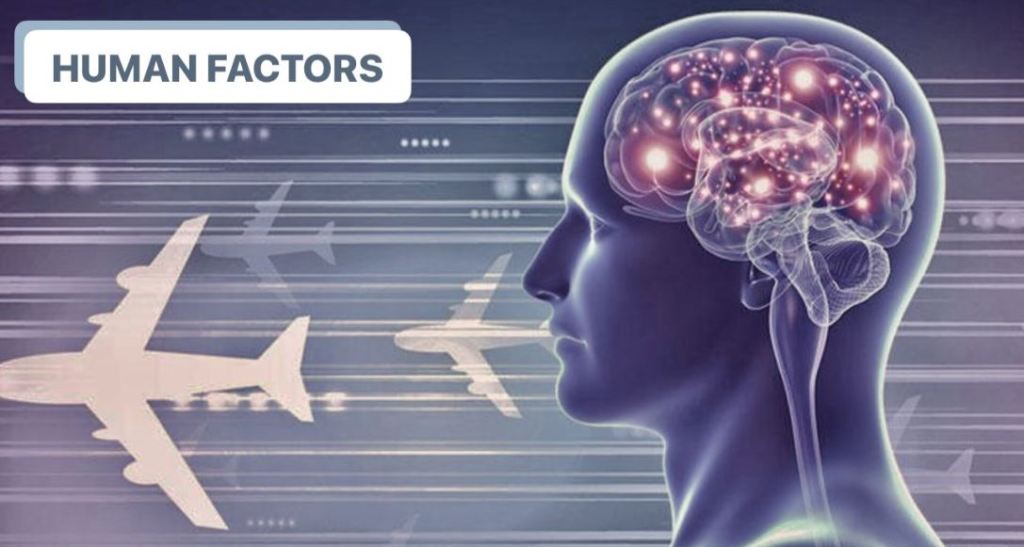
The airline industry is one of the most complex and dynamic industries. It involves a wide range of stakeholders, including airlines, airports, air traffic controls, regulators, and passengers. Human factors [HF] play a critical role in the safe and efficient operation in airline industry.
Let’s, explore the various HF that impact the airline industry and to manage them to improve flight safety.
In the past 2 decades, airline industry has experienced significant growth. However, this growth has also brought with it a number of human factors that have impacted #flight_safety.
HF in the airline industry refers to aspects of human performance that contribute to unmanaged errors, incidents or accidents. These factors can include: Cognitive, Physical and Social. They have been categorized under 3 main areas: HF in Flight Operations, Air Traffic Control and Aircraft Design
Fatigue, stress, communication breakdowns, or inappropriate or inadequate #training are results of the above factors. Although airlines spend fortunes in training requirements, there have been several incidents where HF have played a role in serious incidents and accidents.
Factors that impact flight operations include Crew Resource Management [CRM], Problem-Solving & Decision-Making, and Situational Awareness. Although these factors have been included in almost every pilot training syllabus, yet they need to be routinely updated since both human and technology keep evolving in a fast-paced industry.
Managing HF in the airline business is crucial for ensuring safety and efficiency. It can be achieved through some strategies:
– Training and education: Provide comprehensive training programs for pilots, cabin crew, and ground staff. This should cover technical skills, communication, teamwork, and decision-making.
– Standard Operating Procedures (SOPs): Develop clear and concise SOPs to ensure consistency in operations.
– Fatigue management: Implement policies to manage fatigue, such as proper scheduling, rest periods, and monitoring of duty hours.
– Communication and Teamwork: Encourage open communication, honest feedback to foster a positive work environment and enhance problem-solving.
– Error_Management: Establish a non-punitive reporting system that encourages reporting errors and not only incidents. Analyse these incidents to identify trends and utilise proper training to implement corrective actions.
– Leadership & organisational culture: Promote a safety culture that values continuous improvement, learning, and accountability.
– HF analysis: Regularly assess and evaluate HF in operations to identify areas for improvement and implement necessary changes. Appropriate training (not just ticking-the-box), fair and just safety_culture are pillars to support flight safety objectives.
Greetings from #AbuDhabi, #UAE
Posted on LinkedIn Mid-May, 2023
Discover more from Don’t Sink
Subscribe to get the latest posts sent to your email.
 Don’t Sink
Reblogged this on Don't Sink.
LikeLiked by 1 person