‘The Art of Creative Thinking’
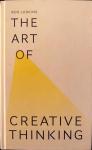
Everyone says that we need to think outside the box. How? How can we embrace collaborate, and be creative. Here are 7 simplified lessons from “The Art of Creative Thinking” by Rod Judkins.
👉 1. 🧠 Think Outside the Box: Creative thinking involves breaking free from routine or traditional thinking and exploring new ideas and solutions. For example, a problem that appears too difficult to solve may have an unconventional answer that requires out-of-the-box thinking.
👉 2. 🌟 Question Assumptions: Creative thinkers challenge assumptions and question established norms. This helps to reveal new insights and opportunities. For example, a new product or service may be successful if it challenges assumptions about what consumers want or need.
👉 3. 🤔 Embrace Ambiguity: Ambiguity and uncertainty can be opportunities for creative thinking. Creative thinkers embrace the unknown and explore multiple possibilities. For example, a business may need to embrace the uncertainty of a changing market to find new opportunities for growth.
👉 4. 🙌 Collaborate: Creative thinkers often work in teams and collaborate with others to bounce ideas and build on each other’s insights. This helps to generate more diverse and innovative ideas than working alone. For example, an artist may collaborate with a writer or musician to create a unique and multidisciplinary work of art.
👉 5. 📝 Keep a Creative Notebook: Creative thinkers may keep a notebook or journal to capture ideas, observations, and insights. This helps to organise ideas and explore connections between seemingly unrelated topics. For example, a writer may keep a notebook of inspiration to draw on when they are looking for new ideas.
👉 6. 🤩 Embrace Risk: Creative thinkers are willing to take risks and try new things, even if they may fail. This helps to break down barriers and explore new possibilities. For example, a startup may be willing to take a risk on an unproven idea or approach to disrupt an industry.
👉 7. 🚀 Take Action: Creative thinking is only effective when it is followed by action. Creative thinkers take the initiative to bring their ideas to life and make a positive impact on the world. For example, an inventor may take action by prototyping and iterating on a new product until it is market-ready.
Overall, “The Art of Creative Thinking” emphasises thinking outside the box, questioning assumptions, embracing ambiguity, collaborating, keeping a creative notebook, embracing risk, and taking action to foster creativity and innovation.
For more lessons, click here>>
Discover more from Don’t Sink
Subscribe to get the latest posts sent to your email.
 Don’t Sink