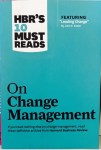
John Kotter, a renowned change management thought leader, defines change as “a process by which an organisation moves from its current state to a desired future state”. Here are 7 simplified lessons from the book “HBR 10 Must Reads on Change:”
👉 1. 🕵️♀️ : Diagnose the problem before implementing change. Analyse the issue and understand its root cause before embarking on a solution. Can this be done by conducting surveys or focus groups? If so, is the group going to identify pain points in an organisation? Would an external consultant do a better job here that your own teams?
👉 2. 💪 : Empower your employees to be change agents. Encourage your team members to take ownership and act as catalysts for change. How many organisations do allow employees to pitch ideas and lead new initiatives? The number does not matter, does it?
👉 3. 🌟 : Communicate the need for change effectively. Clearly articulate the rationale for change and how it benefits the company and its employees. How and where? What is the best medium of communication to do this? Will discussions be allowed? Or it a one way channel? What’s in it for me?
👉 4. 🗝️ : Involve stakeholders in the change process. Consider the input of employees, clients, and partners to ensure a smoother transition. Focus groups or committees might work here! Will they involved in the decision-making process?
👉 5. 📈 : Set realistic goals and measure progress. Set achievable targets and use metrics to track progress towards achieving them. Simply, we need a proper PMO. Would a software help in this process? Well, just track you progress.
👉 6. 🤝 : Embrace resistance and address it with empathy. We need to acknowledge that change can be very difficult. We have to offer support to those who need it. Would you provide training to employees who are struggling to adapt to change? If so, would you do it because you have to? If, so, then you better go back to lesson 1!
👉 7. 💡: Continually iterate and improve the change process. Learn from past experiences and make adjustments to ensure future success. Isn’t this ‘easy-said-than-done’?: Review post-implementation is very important. This is to identify areas for improvement and to gather feedback.
There is always a need for organisations to continually adapt and evolve in response to a constantly changing business environment. Managing change requires effective leadership. According to Kotter, successful change requires a clear vision, effective communication, a strong sense of urgency, and the involvement and commitment of all stakeholders. Check 7 lessons from his book ‘Leading Change’
For more lessons, click here>>
attention Attitude Aviation Behaviour business challenges Change Communication competencies continuousimprovement CRM decision making economy effective_communication engagement environment error management ethics flexibility flightsafety flight safety General Humanfactors integrity knowledge Leadership Learning Management mistake motivation resilent resiliance stress success teams teamwork threats training transparency workload management
Discover more from Don’t Sink
Subscribe to get the latest posts sent to your email.
 Don’t Sink