“Understanding & Managing Risk Attitude”
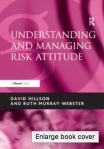
What is the relationship between Common Biases and Risk Management Decisions? Is there a systematic framework for understanding and managing risk and related attitudes? Here are 7 lessons from the book “Understanding & Managing Risk Attitude“, by D. Hillson & R. Murray-Webster.
👉 1. 🤔 People have different risk attitudes. This might affect decision-making. Understanding these differences is key to successful risk management. Some people might be willing to take on more risk in order to pursue a potential opportunity, while others might prefer to be more cautious approach. Which category do you lean more to?
👉 2. 🌍 Culture & context help shape risk attitudes. What is considered a “risky” behaviour or situation in one culture may not be seen that way in another. For instance, bungee jumping is considered as a risky activity in many countries but in some countries, it is an entertainment! Have you tried it?
👉 3. 🗣 Communication in managing risk attitudes. As always, communication is key in any human interrelated activity. Risk managers must be able to communicate effectively with all related stakeholders about the risks involved in a project or decision. They must also be aware of how their own communication style might impact others’ risk attitudes. Just be be careful of biases and group pressure!
👉 4. 🎯 Risk assessment is a critical part of managing risk attitudes. This involves identifying and evaluating potential risks and determining their likelihood and impact. Although, it’s not as easy as it sounds, but it’s crucial: “Your best attitude again is to resist biases and group pressure!”
👉 5. 🤝 Collaboration & Engagement. By involving stakeholders in the risk management process, risk managers can gain a better understanding of their attitudes and concerns. You don’t have too call everyone in the room and fill up the seats!, you only need those who can contribute and have something to say, you should know who is who!. This can help to build trust and cooperation and to ensure that everyone is working towards the same goals.
👉 6. 📈 Risk management is an ongoing process. Once risks have been identified and assessed, they must be monitored and managed over time. Sometimes, situations may change or new risks may arise, requiring a flexible and proactive approach to risk management. How can you be proactive? If you don’t know, then your attitude might be risky too!.
👉 7. 🎨 Creativity & Innovation. Being creative and your aspiration to become innovative in solutions, can help you manage risk attitudes. Creative risk managers can find solutions that minimise risk while still allowing for growth and development. If you don’t have this mindset, you better step down? Hard, isn’t it?
We are all encouraged to read the book and familiarise ourselves with valuable insights and strategies for managing risk attitudes in various contexts. Let’s always take into account the complexities of human behaviour and decision-making. By doing this, risk managers can create more effective risk management strategies that lead to better outcomes.
For more lessons, click Here>>
attention Attitude Aviation Behaviour business challenges Change Communication competencies continuousimprovement CRM decision making economy effective_communication engagement environment error management ethics flexibility flightsafety flight safety General Humanfactors integrity knowledge Leadership Learning Management mistake motivation resilent resiliance stress success teams teamwork threats training transparency workload management
Discover more from Don’t Sink
Subscribe to get the latest posts sent to your email.
 Don’t Sink